
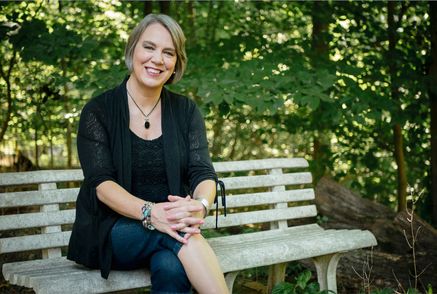
I know my passion for prisons is a bit out of the ordinary. Honestly, before the age of 50, I had never given more than a passing thought to prisons or the people you find behind the walls.
Although I never thought it would be possible, my traditional, privileged, suburban family is now living a story that includes profound mental illness and a son who is serving a long prison sentence for murder.
We now know that my son, J, suffers from Borderline Personality Disorder (among other diagnoses) and also experiences daily visual and auditory hallucinations of unknown origin. The signs of mental illness, however, remained hidden for many years, and it wasn't until J's early adulthood that the symptoms began to show.
Instead of accepting help for his illness, at age 19, he impulsively married a deeply troubled young woman and isolated himself from anyone but her. They wandered the U.S., often homeless, and J eventually fell prey to a powerful deific delusion. For more than a year, he was convinced that the world was about to end, and he was certain that God was calling him to prepare for a time of wilderness survival after Armageddon.
Eventually, in January of 2018, having tried to hide from the coming destruction of humankind high in the Rocky Mountains, J ended up killing the homeowner who returned unexpectedly while he and his wife were hiding in the house.
On my 50th birthday, my son was sentenced to 68 years in prison. This tragedy completely changed the trajectory of my life. My faith was sorely tested, my certainty about life was destroyed, but the resilience of my spirit kept me moving. The learning curve was steep, but I began my education about a whole world behind prison walls, a world I had previously known nothing about.
Although I never thought it would be possible, my traditional, privileged, suburban family is now living a story that includes profound mental illness and a son who is serving a long prison sentence for murder.
We now know that my son, J, suffers from Borderline Personality Disorder (among other diagnoses) and also experiences daily visual and auditory hallucinations of unknown origin. The signs of mental illness, however, remained hidden for many years, and it wasn't until J's early adulthood that the symptoms began to show.
Instead of accepting help for his illness, at age 19, he impulsively married a deeply troubled young woman and isolated himself from anyone but her. They wandered the U.S., often homeless, and J eventually fell prey to a powerful deific delusion. For more than a year, he was convinced that the world was about to end, and he was certain that God was calling him to prepare for a time of wilderness survival after Armageddon.
Eventually, in January of 2018, having tried to hide from the coming destruction of humankind high in the Rocky Mountains, J ended up killing the homeowner who returned unexpectedly while he and his wife were hiding in the house.
On my 50th birthday, my son was sentenced to 68 years in prison. This tragedy completely changed the trajectory of my life. My faith was sorely tested, my certainty about life was destroyed, but the resilience of my spirit kept me moving. The learning curve was steep, but I began my education about a whole world behind prison walls, a world I had previously known nothing about.
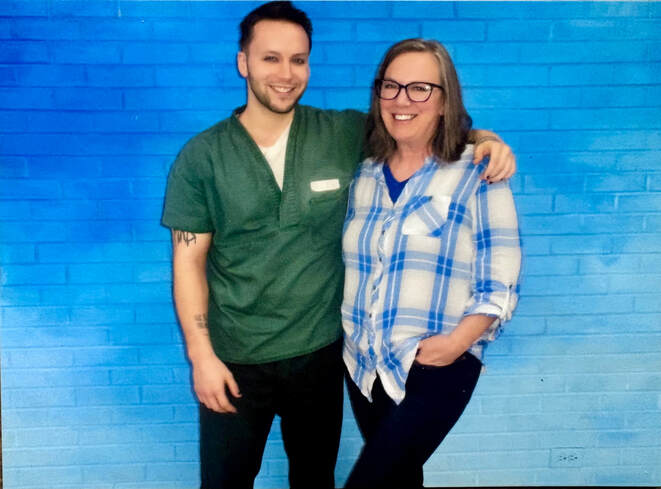
J and Sabrina on a visit in March, 2025
Over slow months of letters and phone calls, I began to see J emerge from the stronghold of madness that had controlled his life for the last few years. As he and I built a new relationship out of the brokenness of the past, I gained a new understanding of a mostly-forgotten people group -- the prison inmates who live out-of-sight, out-of-mind for folks who do not have a direct connection to them.
I began to correspond with a number of J's fellow incarcerees, serving as a penpal encourager, and as I learned their stories, I felt a call to work for something better: for a prison system that would actually move residents toward rehabilitation, rather than serve as a revolving door that would see most of them re-offend and return to prison not long after their release.
And then came COVID.
2020 changed things for everyone across the world, of course. But for J and me, in particular, 2020 changed the paradigm through which we understand prisons.
As J spent months on modified lockdown, he shared via letters his observations about the strain of this profound isolation on the residents. But he also couldn't help noticing how profoundly the correctional officers appeared to be suffering as well. We began to note the unforgivingly harsh environment inside a prison that takes a dramatic toll on officers as well as inmates.
PrisonCare, Inc. was born. I began to study the corrections industry voraciously, and I was astounded at what I learned about this most-often overlooked branch of law enforcement. I studied the statistics emerging from prison life, and I kept finding indications that many prisons are literally killing not only the people who are sentenced to live there, but also the people who are paid to keep them locked up.
It doesn't matter what anyone's politics are. Whether someone is tough on crime or hug-a-thug, no one can deny the reality: our prisons are not only failing at rehabilitation, they foster a toxic environment for everyone who spends their days on the tier, regardless of which uniform they wear.
A new way forward is clear. People with diverse ideologies can work together for positive change for everyone inside the fence. The seeds of a non-partisan approach to prison reform are available to us, if only we are willing to plant them.
And that's what has brought me to a place of deep love for prisons!
If this short version of our story is intriguing to you, I'd love to tell you more.
If this idea for non-partisan reform at a grassroots level (with no lobbying required) appeals to you, I'd love to cast some vision.
If the value of each human life is significant to you, I'd love for us to share our ideas for becoming a part of the solution rather than ignoring a problem that is compromising millions of people behind the razor wire, whether they are sentenced to be there or not.
And if you are stirred in any new way by all of this, thank you for caring!
I began to correspond with a number of J's fellow incarcerees, serving as a penpal encourager, and as I learned their stories, I felt a call to work for something better: for a prison system that would actually move residents toward rehabilitation, rather than serve as a revolving door that would see most of them re-offend and return to prison not long after their release.
And then came COVID.
2020 changed things for everyone across the world, of course. But for J and me, in particular, 2020 changed the paradigm through which we understand prisons.
As J spent months on modified lockdown, he shared via letters his observations about the strain of this profound isolation on the residents. But he also couldn't help noticing how profoundly the correctional officers appeared to be suffering as well. We began to note the unforgivingly harsh environment inside a prison that takes a dramatic toll on officers as well as inmates.
PrisonCare, Inc. was born. I began to study the corrections industry voraciously, and I was astounded at what I learned about this most-often overlooked branch of law enforcement. I studied the statistics emerging from prison life, and I kept finding indications that many prisons are literally killing not only the people who are sentenced to live there, but also the people who are paid to keep them locked up.
It doesn't matter what anyone's politics are. Whether someone is tough on crime or hug-a-thug, no one can deny the reality: our prisons are not only failing at rehabilitation, they foster a toxic environment for everyone who spends their days on the tier, regardless of which uniform they wear.
A new way forward is clear. People with diverse ideologies can work together for positive change for everyone inside the fence. The seeds of a non-partisan approach to prison reform are available to us, if only we are willing to plant them.
And that's what has brought me to a place of deep love for prisons!
If this short version of our story is intriguing to you, I'd love to tell you more.
If this idea for non-partisan reform at a grassroots level (with no lobbying required) appeals to you, I'd love to cast some vision.
If the value of each human life is significant to you, I'd love for us to share our ideas for becoming a part of the solution rather than ignoring a problem that is compromising millions of people behind the razor wire, whether they are sentenced to be there or not.
And if you are stirred in any new way by all of this, thank you for caring!
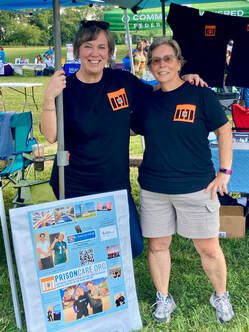
Sabrina and her dear friend Kym, sharing the PrisonCare vision at an event in DE 2023
|
|


